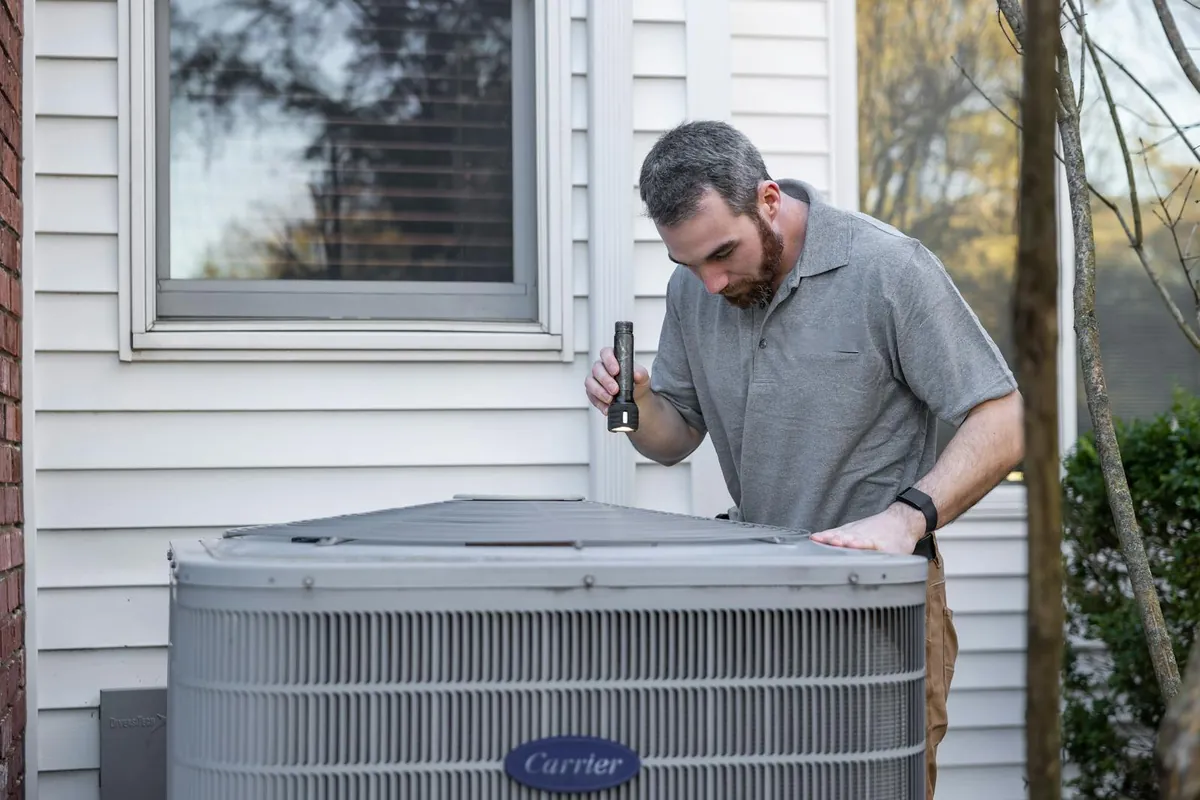
HVAC demand is seasonal and sudden. When the first heat wave or cold snap hits, call volume explodes
— and the company whose site loads fastest and shows a phone number first gets the job.
If your
tap-to-call button is buried under a homepage slider, that emergency AC repair call goes to the next
listing, and the next season starts the same way. HVAC buyers rarely come back later — the ones
who bounce mid-heat-wave are gone for good.
Generic templates quietly bleed the big-ticket jobs too. They bury financing and monthly-payment
information, so homeowners researching a furnace replacement — who need options before
they call — bounce to a competitor who shows payment plans.
There is no maintenance-agreement page,
so the site produces zero recurring-revenue signups. And a single Services page can never
match AC repair near me, furnace replacement cost or heat pump install
searches — Google needs a dedicated page for each.
Competitors who split their services out
collect both the repair calls and the replacement jobs, season after season.
The compounding effect is brutal: a site that loses July's emergency calls also loses the
maintenance-agreement signups, the winter tune-up bookings and every referral those customers
would have made.
Seasonal businesses cannot win a season back — but they can be ready for the next
one, with service and city pages already indexed, financing already visible and a phone number
already in position when demand spikes.
Preparation is the only HVAC marketing strategy that
works on the calendar instead of against it.
Sound familiar? Here's how HVAC companies
get found when homeowners search for emergency repair — and turn that attention into booked
service calls.